Egypt packs an unreasonable amount of the ancient world into one country: the last surviving Wonder of the Ancient World outside Cairo, temple complexes along the Nile that took millennia to build, and, alongside all that history, some of the best diving and beach resorts on the Red Sea and Mediterranean coasts. Most trips move between two very different modes, days spent among pyramids and temples, and days spent doing nothing at all on a private beach, and Egypt is set up for exactly that combination.
Where you base yourself depends on what kind of trip this is. Cairo and Giza are essential for anyone visiting once. The Nile Valley cities of Luxor and Aswan reward a few extra days for the temple sites and a felucca sail. Alexandria offers a slower, Mediterranean-flavoured detour on the coast. And the Red Sea resorts of Sharm El Sheikh and Hurghada, along with the North Coast's Mediterranean beach towns, are where most people go purely to relax after (or instead of) the sightseeing.
Cairo & Giza
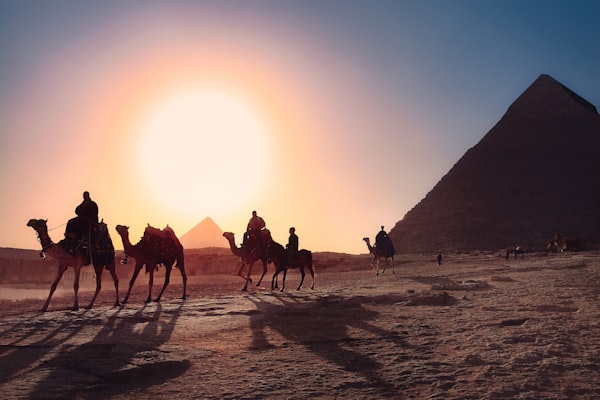
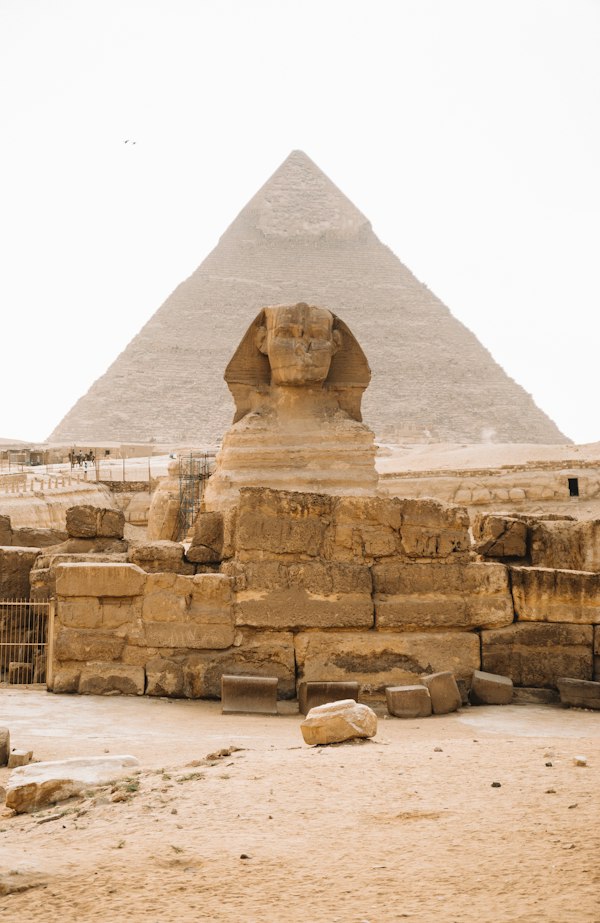
The Pyramids of Giza sit at the edge of modern Cairo, a sprawling, 20-million-person capital, rather than in splendid isolation, and nothing quite prepares you for their scale in person. Arrive at opening time to see the Great Pyramid of Khufu, the Pyramid of Khafre, and the Sphinx before the heat and the tour buses build through the day. The Grand Egyptian Museum, near the pyramids, houses the full Tutankhamun collection in a modern facility that has quickly become one of the most visited museums in the world. In the city itself, Islamic Cairo's Khan el-Khalili bazaar and the Egyptian Museum in Tahrir Square are worth a full day between them, and a felucca sail on the Nile at sunset is the standard, and correct, way to end a day here.
Recommended Stay · Cairo · Nile Plaza
Four Seasons Hotel Cairo at Nile Plaza
A riverfront tower on the Corniche with unbroken Nile views from most rooms, a rooftop pool, and a location that puts the Egyptian Museum, Zamalek, and downtown Cairo all within easy reach.
Luxor & Aswan: the Nile Valley
South of Cairo, the Nile Valley is where Egypt's temple architecture is at its most overwhelming. Luxor alone holds Karnak (the largest religious complex ever built) and the Valley of the Kings, where Tutankhamun's tomb and dozens of others are cut into the desert hills across the river from the modern town. Aswan is quieter and more scenic, Nubian villages, felucca sailing around Elephantine Island, and a short trip further south to Abu Simbel, Ramesses II's rock-cut temples, relocated stone by stone in the 1960s to save them from the Aswan High Dam's floodwaters. A multi-day Nile cruise between the two cities is the classic way to see both without the road transfers.
Alexandria
On the Mediterranean coast, Alexandria trades pyramids for a completely different register, a formerly Greco-Roman port city with a long corniche, the Bibliotheca Alexandrina (a striking modern reimagining of the ancient library), and the underwater ruins of the old royal quarter, visible on diving and glass-boat tours in the harbour. It's a workable one or two-night addition for anyone extending a Cairo trip north, with noticeably cooler, breezier weather than the capital.
Sharm El Sheikh & the Red Sea coast
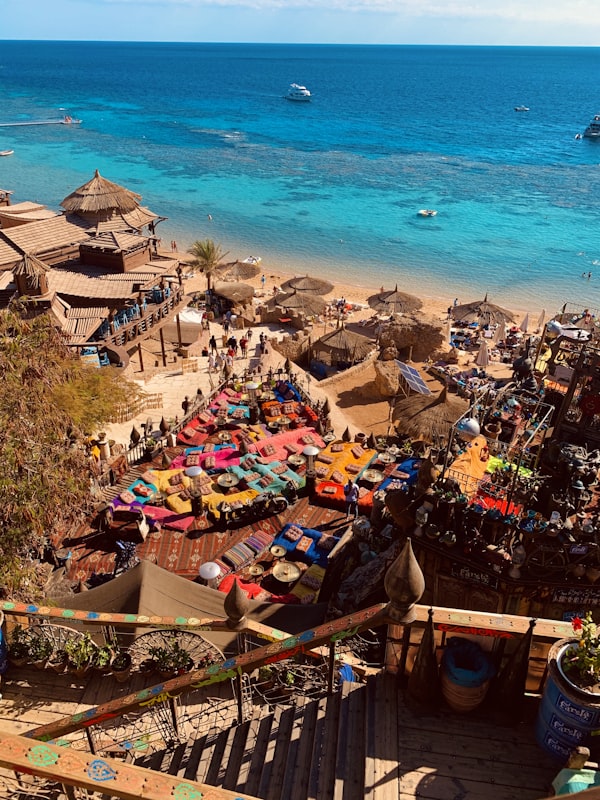
At the southern tip of the Sinai Peninsula, Sharm El Sheikh is Egypt's best-known dive base, with the reefs of Ras Mohammed National Park and the Tiran Strait a short boat ride from most hotels. Naama Bay and Nabq Bay hold most of the large all-inclusive resorts, while Hurghada, across the Red Sea on the mainland, offers a similar mix of diving, snorkelling and beach resort life with easier road access from Cairo. Further south, Marsa Alam and El Gouna are the quieter, less developed alternatives for the same coastline.
The North Coast
West of Alexandria, Egypt's Mediterranean "North Coast" (Sahel) is where Cairenes go in summer, a strip of white-sand beach towns including Marina, Marassi, Hacienda Bay and Almaza Bay, running toward El Alamein and Marsa Matrouh. The water here is turquoise and genuinely Mediterranean rather than Red Sea in character, and the season is short and intense, essentially July and August, with most resorts far quieter (and cheaper) outside those two months.
When to go
For Cairo, Luxor and Aswan, October through April is far more comfortable, summer temperatures in the Nile Valley regularly exceed 40°C. The Red Sea resorts are workable nearly year-round thanks to sea breezes, and the North Coast has a hard, short season centred on July and August. If sightseeing and beach time are both on the itinerary, shoulder season (October, or March–April) tends to give the best balance of weather and crowds.