Madagascar split from mainland Africa roughly 150 million years ago, and the isolation produced one of the most distinctive ecosystems on the planet, over 100 species of lemur found nowhere else, and the surreal silhouettes of centuries-old baobab trees along the island's famous avenue.
Lemurs and National Parks
Andasibe-Mantadia National Park, a few hours from the capital Antananarivo, is the most accessible place to see and hear the indri, the largest living lemur species, whose eerie, whale-like call carries for kilometres through the rainforest at dawn.
Ranomafana and Isalo National Parks offer different terrain again (dense rainforest and dramatic sandstone canyons respectively) each with their own lemur species and worth building into a longer, multi-park itinerary given the island's size and limited road infrastructure.
The Avenue of the Baobabs
The Avenue of the Baobabs, near Morondava on the west coast, lines a dirt road with ancient Grandidier's baobabs, some estimated at 800 years old, sunset here, when the trees' silhouettes darken against the sky, is one of Madagascar's most iconic images.
Madagascar's road network is genuinely limited and travel times between regions can be long, internal flights, though infrequent, are often more practical than overland travel for covering multiple park regions in a single trip.
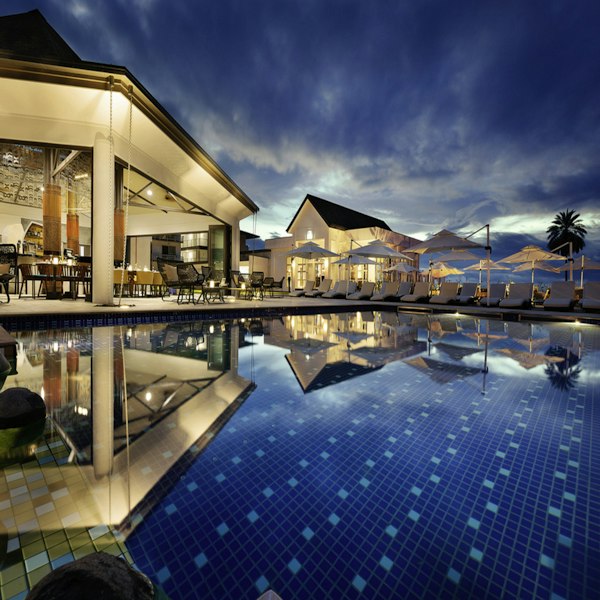
Recommended Stay · Madagascar · Andasibe
Vakona Forest Lodge
A rainforest lodge bordering Andasibe-Mantadia National Park, with wooden bungalows and a private lemur island reserve on the property grounds for close, ethical encounters.