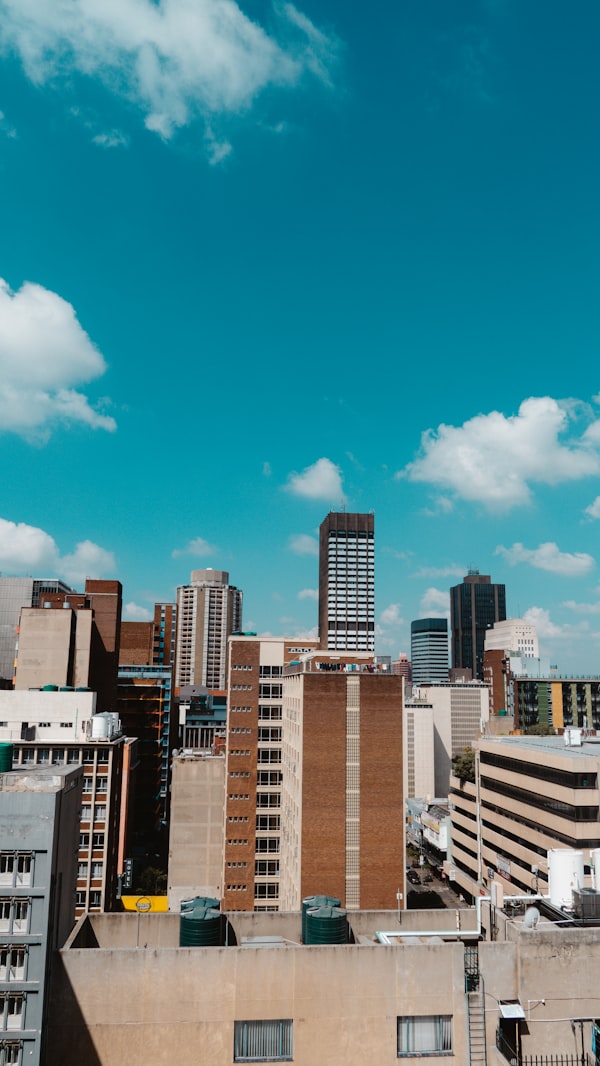
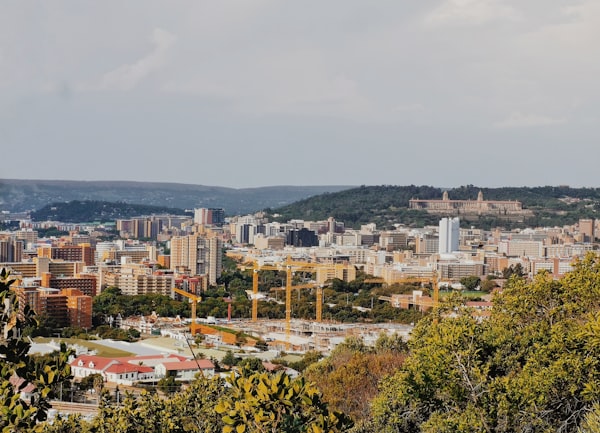
Johannesburg does not introduce itself gently. It is the largest city in South Africa, built on gold, spread across the highveld with no coastline or mountain to organise it, and it rewards visitors who arrive with a plan rather than a wander. Choose the right neighbourhood and the city opens up quickly.
Almost everything a visitor needs sits in the northern suburbs, a band of leafy, well-serviced areas running roughly from Rosebank through Sandton to Fourways. This is where most of the hotels, restaurants and shopping are, and where the Gautrain runs. The old central business district is fascinating and increasingly worth exploring by day with a guide, but it is not where you want to be based.
Choosing a neighbourhood
Sandton is the business district and the safest default if you are here to work: dense, walkable within itself, and directly on the Gautrain. Rosebank is the better choice for a leisure trip, smaller and more relaxed than Sandton, with good galleries, a Sunday rooftop market and its own Gautrain station. Melville and Parkhurst are the neighbourhoods with street life, low-rise and full of independent restaurants, and suit anyone wanting guesthouses over towers. Maboneng, on the eastern edge of the city centre, is the arts and loft district and rewards a day visit more than an overnight stay.
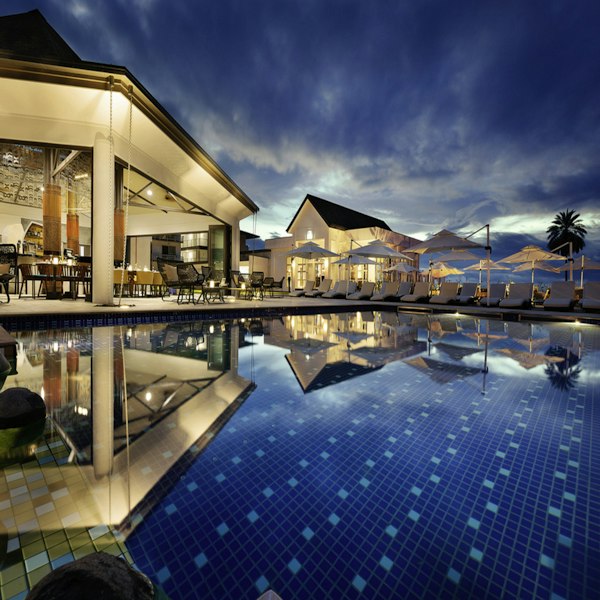
Recommended Stay · Westcliff · South Africa
Four Seasons Hotel The Westcliff
Terraced into the Westcliff ridge above the zoo and the northern suburbs, with long views over Joburg's tree canopy. Quiet, green and about ten minutes from both Rosebank and the city, it feels a world away from the traffic below.
Getting around
Johannesburg is a driving city. Distances are large, the highways are good, and outside peak hours you can cross most of the northern suburbs in twenty minutes. Ride-hailing is cheap, widely used and the simplest option if you would rather not hire a car. Walking between neighbourhoods is not practical; walking within Rosebank, Melville or Parkhurst during the day is completely normal.
What to build a day around
The Apartheid Museum is the single most important thing to see in the city and deserves a full morning. Constitution Hill, built on the site of the old fort prison, is the other essential stop. Soweto is best visited on a guided tour that includes Vilakazi Street and the Hector Pieterson Memorial. If you have a spare day, the Cradle of Humankind and the Sterkfontein Caves are about an hour northwest, and Hartbeespoort Dam sits just beyond them.
When to come
Johannesburg sits at 1,750 metres, which makes the climate far milder than its latitude suggests. Summer, from October to March, is warm with dramatic late-afternoon thunderstorms that clear as fast as they arrive. Winter days are bright, dry and mild; winter nights are genuinely cold, and older guesthouses are not always well heated. Ask about heating if you are visiting between May and August.