Lisbon rewards tired legs. The city is built across seven hills above the Tagus, and its charm is inseparable from the climb, cobbled lanes that switch back on themselves, funiculars groaning up impossible gradients, and viewpoints that arrive as a reward rather than a given. It's cheaper than Paris, sunnier than London, and still, somehow, underrated.
Alfama and the Old City
Alfama is the oldest neighbourhood, a maze that survived the 1755 earthquake and still feels medieval, narrow enough that laundry lines cross overhead and neighbours can pass plates between windows. Get lost here deliberately; every wrong turn produces a courtyard, a tiled façade, or a fado bar with someone actually singing.
Climb to the Miradouro das Portas do Sol at golden hour for the classic view over the terracotta rooftops to the river. It gets busy, so arrive twenty minutes before sunset and claim a spot at the railing with a glass of ginjinha from the kiosk.
Riding Tram 28
The number 28 tram is a genuine public transport route that happens to be one of the best sightseeing rides in Europe, rattling through Graça, Alfama, Baixa, and Estrela on tracks barely wider than the tram itself. Board at the Martim Moniz terminus early morning to get a seat before the tour groups arrive.
Baixa, the flat grid rebuilt after the earthquake, is Lisbon's most walkable district, wide pedestrian streets, the Santa Justa lift, and the Praça do Comércio opening onto the river. It's less atmospheric than the hills but essential for orientation.
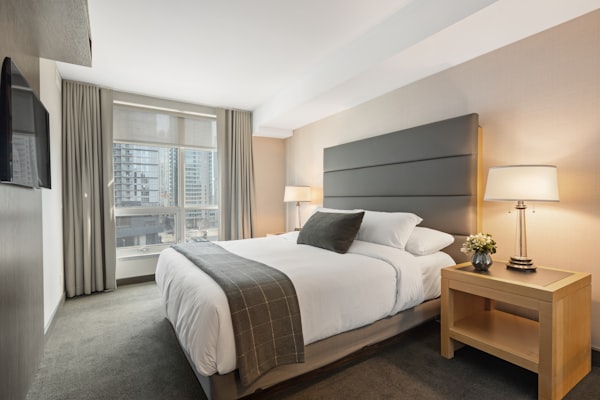
Recommended Stay · Lisbon · Baixa
Casa da Baixa
A converted 18th-century townhouse in the heart of Baixa, with tiled corridors, a rooftop terrace over the rebuilt grid, and easy walking access to Alfama, the river, and the funicular up to Bairro Alto.