Yogyakarta, still ruled in a ceremonial capacity by a reigning sultan whose palace remains an active royal residence, functions as Java's cultural and artistic capital, and sits within an hour of both Borobudur, the largest Buddhist temple on earth, and Prambanan, Indonesia's largest Hindu temple complex, an unusually dense concentration of world-class ancient monuments.
Borobudur and Prambanan
Borobudur, built in the 9th century and rediscovered under volcanic ash and jungle growth in the early 1800s, is arranged as a massive three-dimensional mandala, nine stacked platforms lined with over 2,600 relief panels and 500 Buddha statues, meant to be walked in a specific ritual ascent toward enlightenment. Arrive for sunrise, when mist often clings to the surrounding volcanoes.
Prambanan, a 9th-century Hindu temple complex dedicated to Shiva, Vishnu, and Brahma, rivals Borobudur in scale and significance despite receiving less international attention, its central Shiva temple, at 47 metres, is one of the tallest Hindu temple structures in Southeast Asia.
The Sultan's City
The Kraton, Yogyakarta's still-inhabited sultan's palace, offers guided tours through its pavilions and courtyards, along with traditional gamelan and dance performances, a rare instance of a functioning royal court remaining genuinely open to visitors rather than existing purely as a museum.
Malioboro Street, the city's main commercial thoroughfare, is Yogyakarta's best introduction to Javanese street food and batik shopping, the city is considered the historic centre of the batik textile tradition, and workshops throughout town offer both demonstrations and classes.
Recommended Stay · Yogyakarta · Borobudur
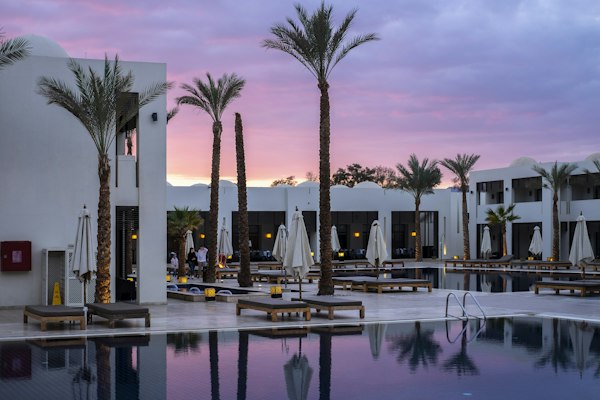
Plataran Borobudur Resort & Spa
A resort set among rice paddies with direct views of Borobudur temple and Mount Merapi, offering private sunrise tours ahead of the general public opening.