Delhi has been the capital of successive empires for nearly a thousand years, and the city wears that history in distinct, overlapping layers, Mughal forts and mosques in Old Delhi, the imperial boulevards the British built a few kilometres south in New Delhi, and a modern metropolis of over 30 million people wrapped around both.
Old Delhi
The Red Fort, the Mughal Empire's seat of power for over 200 years, anchors Old Delhi with its massive red sandstone walls, though much of the original interior treasures were looted following the 1857 uprising. Jama Masjid, India's largest mosque, sits nearby and can be climbed for a panoramic view over the old city's chaotic rooftops.
Chandni Chowk, the old city's main bazaar, is best explored on foot or by cycle rickshaw, a dense, overwhelming, genuinely thrilling stretch of spice markets, wedding shops, and street food stalls that has operated in some form since the 17th century.
New Delhi and Beyond
New Delhi, designed by British architect Edwin Lutyens in the early 20th century, is a study in imperial contrast to the old city, wide tree-lined avenues, India Gate, and the Rashtrapati Bhavan presidential palace, all built explicitly to project colonial authority.
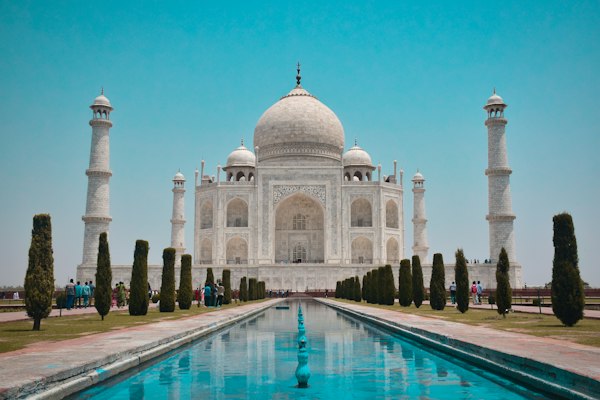
Humayun's Tomb, a UNESCO World Heritage site and precursor in style to the Taj Mahal, is one of Delhi's most underrated sights, extensive Persian-influenced gardens and a scale that rivals its more famous descendant with a fraction of the crowds.

Recommended Stay · Delhi · Connaught Place
The Imperial New Delhi
An Art Deco landmark hotel dating to 1931, with a private art collection tracing India's colonial and independence history, steps from Connaught Place.