Jeju Island, formed entirely by volcanic activity and dominated by Hallasan, South Korea's highest peak, has long served as the country's honeymoon and holiday destination, a UNESCO-listed landscape of lava tubes, basalt cliffs, and a matriarchal diving tradition (the haenyeo) found almost nowhere else in the world.
Volcanic Landscapes
Seongsan Ilchulbong, a tuff cone rising dramatically from the sea on Jeju's eastern coast, is best climbed at sunrise, when its name (literally 'Sunrise Peak') makes the most sense. The crater at the summit, a green bowl ringed by jagged volcanic rock, is one of the island's most photographed sights.
Hallasan, a dormant volcano and South Korea's highest mountain, can be climbed via several trails of varying difficulty, with the summit crater lake only fully visible outside the driest months, permits and trail schedules are required and should be checked before setting out.
The Haenyeo Divers
The haenyeo, elderly women who free-dive without oxygen tanks to harvest abalone, sea urchin, and octopus, represent a matriarchal diving tradition unique to Jeju and now recognised by UNESCO as intangible cultural heritage, their numbers are dwindling, and museums and small performance shows near the coast now help preserve the practice's memory.
Manjanggul Cave, one of the world's longest lava tube systems, offers a walkable section open to visitors, with a lava column formation considered the tallest of its kind anywhere, a cool, atmospheric contrast to the island's sun-drenched coastal scenery.
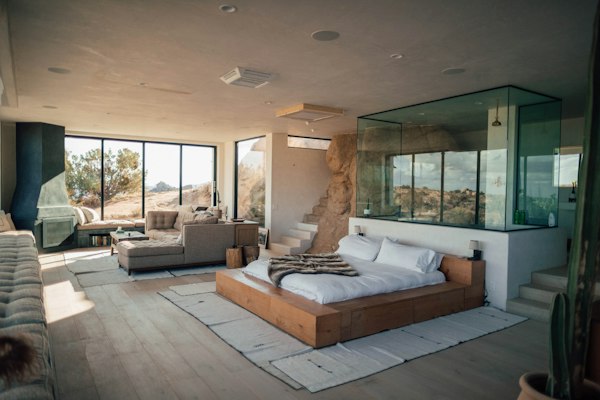
Recommended Stay · Jeju · Seogwipo
Podo Hotel
A minimalist resort near Jeju's southern coast, designed by renowned architect Tadao Ando, blending concrete and natural light with views over the surrounding countryside.